
🚀 Warp-speed summary (in 3 sentences)
- Woman relives the same day over and over again.
- Together with her husband, she tries to break out of her time-loop.
- The book itself goes in loops.
📡 Discovery
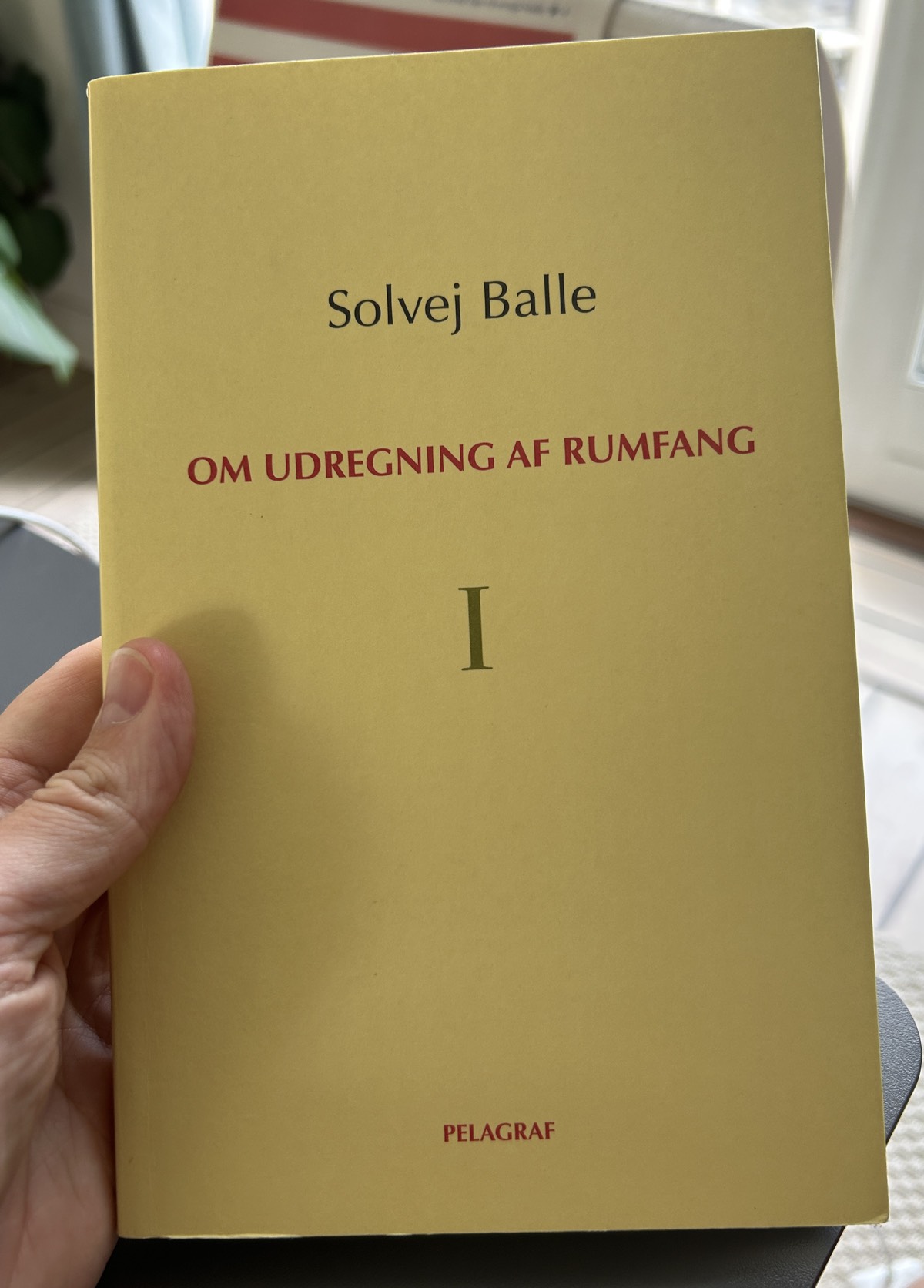
The book is the first in a series of seven books, and has been widely celebrated. Solvej Balle won the Nordic Council Literature Prize, has been featured in the New York Times, and lives in my geographical neighborhood. And it is about time-loops! What’s not to like?
👨🚀 Impressions
Well, a lot. I honestly hated this book. The premise is a Groundhog Day-type situation, in which Tara – the main protagonist – is caught in the same day, and is forced to relive it over and over again.
The book explores the emotions a woman with literally no agency would have in such a situation. Think of it as the five stages of grief, but for people stuck in a time-loop. Tara tries to get help from her husband, who – instead of taking his wife to see a psychiatrist – is easily persuaded, day after day, to help come up with solutions for Tara’s trap. It’s a weird thing to critique, but honestly, this made no sense to me. Why is he not flustered that his wife is talking about being trapped in time? Unfortunately for Tara, and for the reader, the solutions they come up with are extremely boring, and for reasons that are frustratingly unclear, they give up on their silly attempts at the slightest inconvenience. One night they try to simply stay awake to identify the exact time the day is reset. However, they fall asleep. Well: that didn’t work, let’s not try that again, ever. At some point, one gets the impression the author simply did not really have any ideas about what the protagonist should do, and so for chapter after chapter, Tara walks the streets of her imaginary town. Caught in both time and a bad story.
Some things are seemingly following Tara’s temporal reality – for example, injuries she sustains are kept, as is her memory, and also objects in close proximity to her, for example a diary and the food she eats. Slowly, the food in her garden and local grocery disappear as she eats through her town’s stores. Perhaps a weakly articulated critique of our consumer society? I think the author wrote the story literally, meaning actions and events should be taken at face value. If that’s the case, the physics of this story makes no sense within its own premise, which is incredibly annoying. But honestly, you could remove the entire time-loop aspect of the book, and nothing would change. To me this just seems lazy.
However, my main annoyance is the lack of personal development (for lack of a better term) of Tara. The main point of Groundhog Day – and the reason some philosophers love the film – is that the main protagonist actually ends up doing something that fulfills his life. The premise here is clearly a rip-off this trope. However, Tara picks another direction, mainly that she seems to learn little of her Nietzschean nightmare of eternal Recurrence. At the end of the day, the book is only interested in the ‘volume’ that Tara fills at the outset. After all calculations have been presented, the result is simply that Tara does not take up any volume at all. Perhaps this is the reason the universe decided to move on without her?
But really, the point is not anything deep. The book is simply an exercise in ambiguity. I think the reason many people like the story, is the vagueness of the whole thing – a friend of mine thought it was about a woman, living with a husband who had dementia and was slowly losing his mind. Another that it was a story about a woman having a psychotic breakdown. The human mind’s propensity to make up stories, especially when confronted by a meaningless story, is a well-established fact. Here it is taken advantage of to it’s fullest, and nobody is any the wiser for it.
Top three moments
- The initial description of Tara discovering her temporal condition.
- Discuss the book with friends.
- The vague critique of our consumerism.
⭐ Rating
🥱: 1 out 5 yawns.
